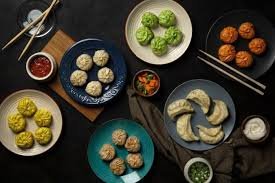
momos
Momos are steamed or fried dumplings that have their roots in Tibetan and Nepalese cuisine but have now become a beloved street food across India, Bhutan, and even parts of Southeast Asia. These small pockets of joy are filled with meat, vegetables, or cheese, wrapped in a thin dough, and cooked to perfection. The beauty of momos lies in their versatility—they can be spicy, savory, or even sweet depending on the region and filling. Today, momos are not just a local delicacy but a global trend, appearing in cafes, food trucks, and home kitchens around the world.
History and Origin of Momos
The origin of momos dates back to the Himalayan regions of Tibet and Nepal, where the cold weather called for warm, filling foods. The word “momo” is believed to come from a Tibetan term meaning “steamed bread.” Traditionally, they were filled with yak meat, but as the dish traveled across borders and cultures, variations emerged using chicken, vegetables, paneer, and even tofu. With the migration of Tibetan and Nepalese communities into India, especially in places like Darjeeling and Sikkim, momos quickly integrated into the Indian street food scene and became widely popular.
➤ Explore the history of momos in India
Types of Momos You Should Know
There are many types of momos, and each variety offers a unique flavor experience. Steamed momos are the most traditional and healthy option, made by steaming the dumplings in bamboo or steel steamers. Fried momos, also known as pan-fried or kothey momos, are crispy on the outside and juicy on the inside. Tandoori momos are marinated in spices and cooked in a tandoor oven, blending Indian and Tibetan flavors. Soup momos are served in a spicy broth, making them perfect for colder climates. There are also cheese momos, sweet momos, and even chocolate momos emerging in fusion kitchens.
➤ Check out these popular types of momos
Momos vs Dumplings: What’s the Difference?
Many people confuse momos with Chinese dumplings, but there are some key differences. While both are filled dough pockets, momos are typically larger and have a thicker, slightly chewy wrapper. The filling in momos is also heavily influenced by Tibetan and Nepalese spices, including garlic, onion, and ginger. Dumplings, especially in Chinese cuisine, come in dozens of regional varieties like jiaozi, wontons, and xiao long bao, each with its own cooking technique and flavor profile. Momos are also more commonly served with red chili garlic chutney, making them spicier than most East Asian dumplings.
How to Make Momos at Home
Making momos at home is surprisingly simple and highly rewarding. The process involves making a basic dough with flour and water, rolling it out into thin circles, adding your preferred filling, and sealing the edges. You can steam them in a traditional momo steamer or use a regular pot with a rack. Common fillings include minced chicken, paneer, cabbage and carrot, or even mushrooms and onions. To seal, you can fold the dough in a crescent shape, pleated pattern, or round parcel. Once steamed or fried, serve with spicy momo chutney made from tomatoes, garlic, chilies, and vinegar.
➤ Learn how to make authentic momos at home
Health Benefits and Nutrition of Momos
While steamed momos are considered healthier than their fried counterparts, their nutritional value largely depends on the filling. A vegetable momo is low in fat and rich in fiber and vitamins. Chicken momos are high in protein and can be made with minimal oil. However, fried or tandoori momos may contain more calories and saturated fat. For a healthier twist, you can use whole wheat flour for the wrappers and limit the use of added oil. As a snack, momos are filling, satisfying, and can be made into a balanced meal when paired with a fresh salad or clear soup.
Momos as a Street Food Culture
In cities like Delhi, Mumbai, Kolkata, and Bangalore, momos have become a staple of the urban street food scene. Vendors set up carts at street corners, colleges, markets, and metro stations, often attracting long queues of hungry customers. Prices are affordable, and portions are generous, making momos a favorite among students and workers. The spicy chutney served with momos is iconic in its own right, often made fresh and varying from vendor to vendor. This street food phenomenon has helped momos become one of the most loved snacks in India, rivalling even classics like samosas and chaat.
➤ Dive into India’s momo street food craze
Modern Fusion and International Variants
As momos gained popularity, chefs and food enthusiasts began experimenting with fusion versions. Today you’ll find pizza momos, schezwan momos, butter chicken momos, and even noodle-stuffed momos. Restaurants in Western countries have also adopted the dish, offering it on menus in London, New York, and Toronto under names like “Tibetan dumplings” or “Nepali gyoza.” Vegan versions with tofu or jackfruit are also trending, especially in health-conscious communities. Momos have proven that with a little creativity, they can adapt to almost any cuisine or dietary preference while retaining their original charm.
Momos in Pop Culture and Social Media
In recent years, momos have gone viral on platforms like Instagram, YouTube, and TikTok. Street vendors showing off their speed folding techniques or creating rainbow-colored momos draw millions of views. Food bloggers and influencers post step-by-step recipes and spicy challenge videos that add to the momo mania. The visual appeal of momos—their shape, steam, and chutney—makes them incredibly shareable. This has helped spread awareness of the dish even in places where it wasn’t traditionally known, making momos a truly global food trend.
Conclusion: Why Momos Will Always Be Loved
Whether you enjoy them steamed, fried, tandoori, or soupy, momos are more than just food—they’re a symbol of cultural exchange, comfort, and creativity. Their growing popularity is no surprise—they’re affordable, customizable, and absolutely delicious. From street stalls in Kathmandu to kitchens in Kolkata, from Himalayan homesteads to international restaurants, momos have made their mark as one of the most beloved dumplings in the world. So the next time you spot a momo stall or try a recipe at home, know that you’re participating in a rich culinary tradition that continues to evolve and delight.
About the Author