Importance and Future
Email marketing continues to play a central role in the digital marketing landscape, even in an era dominated by social media, paid advertising, and emerging AI-powered tools. As a channel that offers direct access to consumers, email remains one of the most reliable and cost-effective methods for brands to communicate with their audience. Its effectiveness lies in its ability to deliver personalized, relevant content straight to a user’s inbox—something no algorithm can restrict or alter. Whether you’re a small business owner or a global enterprise, email marketing should be at the heart of your digital strategy.
Why Email Marketing Still Works
Despite being one of the oldest digital channels, email marketing still works—and works exceptionally well. There are several reasons for this continued effectiveness. First, people still rely on email for daily communication. It’s not limited by age or demographic and is accessible from smartphones, tablets, and desktops alike. Second, email marketing is permission-based, meaning users have voluntarily subscribed to receive communication. This increases the likelihood that they are interested in what you have to offer. Third, emails are highly customizable. With modern tools, marketers can segment audiences, personalize content, and use behavioral triggers to send timely, relevant messages. Finally, email marketing offers one of the highest ROIs in digital marketing. According to recent reports, it returns an average of $36 to $42 for every $1 spent.
Email Marketing vs. Social Media Marketing
Many marketers wonder whether email is still worth investing in compared to newer platforms like Instagram, TikTok, or YouTube. The truth is and should work together rather than compete. Social media is great for building brand awareness, engaging communities, and reaching new audiences. However, it’s often limited by platform algorithms, making it difficult to reach all followers. Email, on the other hand, provides direct communication with your audience. There is no algorithm deciding who sees your message. When used together, these channels can amplify each other. For example, a brand might use social media to grow its email list and then use email marketing to deepen relationships and drive conversions.
Benefits of Email Marketing for Businesses
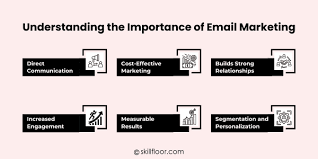
Email marketing offers a wide range of benefits that make it essential for both B2B and B2C companies. Some of the most notable advantages include: 1. Direct Access to Customers: When someone subscribes to your list, they’re giving you permission to contact them directly. This is much more personal and reliable than relying on third-party platforms. 2. Cost-Effective: Unlike paid ads that require constant spending, email campaigns are affordable to run, especially when compared to other digital marketing methods. 3. Personalization and Segmentation: Advanced tools allow you to send the right message to the right person at the right time. Segmentation and dynamic content help improve engagement and conversions. 4. Measurable Performance: Every aspect of an email campaign can be tracked, including open rates, click-through rates, conversions, and unsubscribes. This data allows marketers to continuously improve. 5. Automation: Modern email marketing tools allow businesses to create automated workflows that engage customers at every stage of the buyer’s journey—from welcome emails to abandoned cart reminders. 6. Scalability: Whether you’re sending to 100 subscribers or 100,000, email marketing can scale easily without a loss in personalization or quality. 7. Long-Term Relationship Building: Emails help maintain a consistent connection with customers, increasing lifetime value and brand loyalty.
Key Components of a Successful Email Campaign
Creating a successful email marketing campaign involves more than just writing a message and hitting send. Several critical elements contribute to high performance. Compelling Subject Line: This is the first thing recipients see, and it determines whether they’ll open your email. A/B testing subject lines is a common practice to find what works best. Personalized Content: Addressing subscribers by name, using dynamic content blocks, and sending targeted offers based on behavior can significantly improve engagement. Strong Call to Action (CTA): Every email should have a clear goal. Whether it’s to visit a landing page, complete a purchase, or read a blog, your CTA should stand out and be easy to follow. Responsive Design: Emails must be mobile-friendly. A large percentage of users read emails on smartphones, so a poor mobile experience can reduce performance. Clear Layout and Branding: The design should reflect your brand, be easy to navigate, and guide the reader toward the intended action. Compliance with Laws: Ensure your emails comply with laws like GDPR, CAN-SPAM, and other regulations. Always include an unsubscribe link and avoid misleading content.
Email Marketing Tools and Platforms
There are dozens of email marketing tools available today, each offering unique features. Some of the most popular include: Mailchimp: Great for beginners and small businesses. Offers automation, templates, analytics, and integrations with other platforms. Klaviyo: Ideal for e-commerce businesses. Provides powerful segmentation, behavioral triggers, and integrations with Shopify, Magento, and WooCommerce. HubSpot: A full-featured marketing automation tool with robust CRM integration, workflows, and analytics. Best suited for mid to large businesses. ActiveCampaign: Offers powerful automation, detailed segmentation, and CRM functionality. Popular among SaaS and service-based businesses. ConvertKit: Designed for creators and bloggers. Offers simple automation and clean, customizable templates. Brevo (formerly Sendinblue): Offers email marketing, SMS, and automation at competitive pricing. Good for businesses that want a multi-channel approach.
The Role of Automation in Email Marketing
One of the most powerful developments in recent years has been the rise of email marketing automation. Instead of manually sending individual campaigns, marketers can now set up automated workflows that run based on user actions or predefined schedules. Examples include: Welcome Sequences: Automatically greet new subscribers with a series of introductory emails. Cart Abandonment Emails: Remind users to complete their purchase with follow-up emails. Re-engagement Campaigns: Target subscribers who haven’t opened or clicked in a while to bring them back. Behavior-Based Triggers: Send emails based on user behavior like browsing a product page, downloading a file, or signing up for a webinar. Automation not only saves time but also ensures consistent communication and timely engagement, increasing the likelihood of conversion and customer satisfaction.
Email Marketing Trends to Watch
The future of email marketing is full of innovation and evolution. Here are some key trends to watch: 1. Hyper-Personalization: AI and data analytics are enabling even deeper personalization. Emails are becoming more relevant and tailored to individual user behaviors. 2. Interactive Emails: Features like image carousels, surveys, polls, and shopping experiences within emails are increasing engagement. 3. AI-Generated Content: More marketers are using AI tools to generate subject lines, CTAs, and body copy—helping speed up the content creation process. 4. Dark Mode Optimization: As dark mode becomes more popular, emails need to be designed to look good in both light and dark modes. 5. Privacy-First Strategies: With increasing regulation and privacy concerns, marketers are focusing on building trust and transparency in how they collect and use data. 6. SMS and Email Integration: Brands are combining email with SMS campaigns for a multi-channel communication strategy. This increases the chances of reaching the user in real-time.
Challenges in Email Marketing
Despite its advantages, email marketing does come with some challenges. Inbox Clutter: With users receiving dozens or even hundreds of emails per day, it’s becoming harder to stand out. Spam Filters: Emails that don’t follow best practices may end up in spam folders, never reaching the intended audience. Data Management: Keeping email lists clean and updated is essential for performance. Dead emails, inactive users, or incorrect segmentation can harm results. Design and Compatibility: Emails need to display correctly across all devices and email clients, which can be technically challenging. Changing Regulations: Marketers must stay up to date on laws like GDPR, CAN-SPAM, and others that affect how emails are collected and sent.
The Future of Email Marketing
The future of email marketing is not only secure but promising. With advancements in technology and data-driven marketing, email will become more personalized, interactive, and integrated with other channels. AI will assist marketers in predicting the best time to send, choosing subject lines, and crafting content based on historical performance. Moreover, customer data platforms (CDPs) will allow for even more refined targeting and personalization. Email marketing will also play a central role in omnichannel marketing, acting as a bridge between platforms like websites, social media, and SMS. In the coming years, we can expect smarter automation, voice-assisted emails, and even integration with AR/VR technologies for unique user experiences. Ultimately, the brands that treat email as a strategic asset—rather than just a promotional tool—will see the most success.
Conclusion
Email marketing remains one of the most effective and essential parts of a digital strategy. Its ability to deliver personalized, cost-effective, and measurable results makes it a preferred channel for businesses of all sizes. From automation and segmentation to analytics and creative storytelling, email offers endless opportunities to engage and convert your audience. As trends evolve and technology advances, marketers who invest in mastering email marketing will continue to have a significant advantage in the competitive digital landscape.
About the Author